Monday, September 8, 2014

What lens should I use? 35mm vs 70mm

What lens you use for shooting your film really depends on what you are shooting.  Is it an interview, action or something else.  For the most part I like to stick to my 35mm 1.5 and my 55mm 1.5 lenses. I like to shoot with these lenses because they are very versatile.  No matter the light, I can usually get the shot I am looking for.The background becomes soft while keeping the subject fairly crisp.  However, when shooting with such a large aperture light tends to leak and can cause more fuzziness than is intended.  Some highly expensive lenses can correct for this but in most cases it always happens.  If you are shooting, say, an interview and you want the subject to be as crisp as possible a smaller aperture might be what is needed.  What if you do not have enough lights?  Well, then it becomes a little tricky, but you can overcome any obstacle if you have the right knowledge.

Left is Sony 16-50    /    Right is Tamron 70-200
Here is a side by side comparison of two of my variable zoom lenses.  The shot on the left is a Sony 16-50 2.3 constant aperture and the left is the Tamron 70-200 4.0 constant aperture.  Arguably, the Sony is the better lens due to it being made in the same way the Zeiss version of this lens.  The workmanship and the tolerances are the only difference.  The Sony 16-50 is a great versatile, heavy lens that, at one time, was considered the best kit lens Sony had.  The Tamron, on the other hand, is a good lens but it does tend to get a little fuzzy when out to 200mm.  The color profiles are slightly dissimilar and the lighting is quite different.  The left is lit with room lights and a soft-box, the right is lit with a soft-box and one 60 watt fill.  As you can see, if you look closely, the subject on the left is fuzzy and is not as clear as the subject on the right.  My focus was perfect, according to the Sony peaking meter anyway, so they should have been just as crisp, they obviously aren't.  The reason for this disparity in focus is due to the aperture of the lens, or how much light it is letting in.  The Tamron cannot go below an f4 but the Sony is at 2.3.  
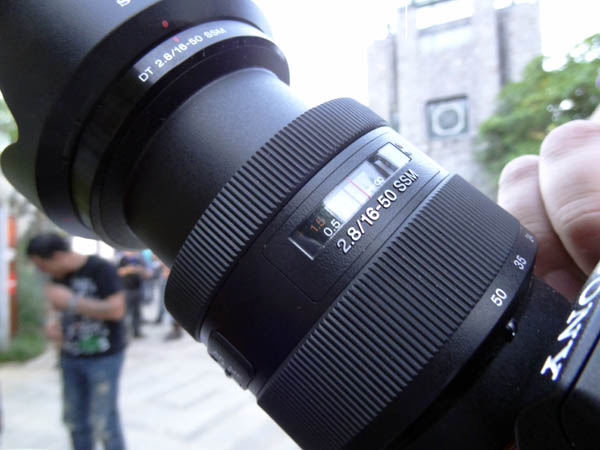
Sony 16-50
Needless to say, I will be using the Tamron for interviews from now on.  That is, if I can get far enough away from the subject.  You see, the drawback of using the 70mm is that I had to be more than 8 or 10 feet away from my subject.  Something very hard to do in a 10 x 14 foot room.  If that room I used the 70mm in was any smaller, I would have had no choice but to use the 35mm or the 16-50.  
Tamron 70-200

The other upside to using the 70mm is the fact that it has less inherent lens distortion than the 16-50 lens has.  Because it has such a wide angle at 16mm, the lens tends to bend the shapes coming in the sensor.  Good lenses will get most of it out but even then you have to zoom to about 25 or 35mm to get that distortion out of the picture.  You could do it in post, but it is better to do it in camera, trust me on that one.  A good 35mm or 55mm prime lens will have little to no distortion and you can trust that those lenses will perform just as good as the 70-200.  

An example of Bokeh
So far you have heard me tout the goodness of the Tamron lens.  It is a decent lens, for $400 you get every pennies worth.  However, there is something this lens just isn't as good at as the 35mm and the 16-50.  This is something called Bokeh.  This is when the background has become blurred out of focus to the point that the only thing that is left is a round blur or shape.  It is a highly sought out effect that makes beautiful shots that much more beautiful.  It is possible to get some bokeh out of the Tamron but nothing like the lower aperture lenses.  It is a must if you want to utilize an artistic focus pull on some close in objects.  This would not be highly recommended to use on a dialogue heavy scene between two characters, best use the 70 for that.  But, you know, it's your movie, If that's what you want to do.  Go ahead!  

So, which lens is right for your shot, well...  Landscapes you need to use an aperture of about f 14 during the day and maybe a little lower at night.  Interviews you want to get that aperture number as low as you can and still keep the subject sharp (move them further away from the wall would help loads btw)  For action scenes during the day, you should use a smaller aperture (a higher number) to make sure the subject is clear, at night use the largest aperture (a smaller number) as you can without increasing that ISO too much.  Dramatic scenes are great for using a softer focus so it might call for an f 1.5 aperture number (Larger aperture) instead of making it so clear you can see the pours on the actors faces.  I mean, its supposed to be slightly dreamy this thing called love..  Isn't it?  


Wednesday, September 3, 2014

The fuss over Mac and PC

In the world of graphic arts and Film-making there is a general rule that you just have to have a Mac.  I, of course, am always bucking trends and have a PC, and I really had no choice.  For some reason the world of artists believe that the magical Mac will automatically make you more creative and make the world a better place.  Um, no.  If only, I'll take three.  The difference is that there is a between a Mac and PC and sometimes it is quite noticeable.  I'll admit that I really enjoy the luxury of the Mac operating system with all of its beautiful integration and quirks, but being pretty doesn't always get the job done.
PC Vs. Mac Ad

Recently, I had to purchase another box (computer) and because I am part geek, part artist and part logical thinker, I tried all of them.  I bought the super high end MacBook Pro with all the whistles.  I took it home and put the Adobe CC applications on it that I needed and went to work.  I made a 3d Ray Traced graphic and went to town.  I thought the MacBook Pro would chew it up and spit it out, or at least take less time than the current PC I was using from 2010 that took 72 hours.  The MacBook Pro did a good job at making the required render but it was still a whopping 7.5 hours to create.  To me, that is still way too long.  Now, granted, what I was trying to do was so complicated and hard that no one in their right mind would have made it the way I was doing it.  I was creating it in Adobe After Effects without any third party plug-ins.  There is almost nothing more difficult for the software and hardware to create than what I was attempting, but that is exactly why I was doing it.

The next step for me was to look at PC offerings.  The box I really needed to get the job done would have been a six core beast that cost north of Six Grand.  Needless to say, that was outside my comfort zone.  The MacBook Pro was actually outside my price range as well at about $3,000.  So I settled on trying an Alienware with two GTX 770's bridged together.  Yes, I know, it is geek speak and nothing I just said makes any sense.  Anyway...  I got the Alienware to the house and put it to the test.  Same render, same programs and the dang thing did it in Thirty Minutes.  Holy Cow!  


Some will say that I am comparing a desktop to a laptop, that is true.  However, if you look at the specs of the MacBook Pro, it has the same graphics card that the iMac does, the same i7 processor and so on and so forth.  What more would I be getting from the iMac than I get from the MacBook Pro?  As far as tech specs on paper, not much.  I also considered the MacPro but that thing is too pricey and I couldn't afford it.  
Yeah, This is a Hipster.
So, I kept the Alienware computer and use it daily, but I do miss the Apple interface and all its fun stuff that I absolutely do not need to get my job done. I will miss looking cool at the coffee shop and bookstores.  My hipster friends seem to be a little bit more withdrawn ever since as well.  But I'll never regret purchasing my Alienware, and I damn sure will enjoy the extra $700.00 I got to keep in my wallet for going PC over Mac.


Tuesday, September 2, 2014

The first thing to know about filming a movie: Move The Camera!

One of the first things that I learned about making films was that most Indie productions looked the same.  I tried to figure this out for a long time until I came across the fact that they are all using static camera angle.  In the film lingo world a tripod shot is sometimes called a "pedestal" shot.  That's where the camera is put on a tripod or something similar and it stays there.  Yes, we have the ability to pan left and right, up and down but that is still very... well, uninteresting.  There are times that it is necessary to make sure the camera is not moving but, in my opinion, that isn't something to be done all the time.  In fact, there is even a feature in the editing software that adds camera shake.  That right there should tell all of us that movement of the camera is essential.  What other reason could there be to add a preset to a program that makes perfect footage shake?


There are several ways to make a camera angle live.  No, that's not the correct term for it but maybe it should be.  One way (and one of my favorites) is to shoot with a Jib.  A jib brings heavy motion into the frame and when used correctly, can make ordinary footage look like a Hollywood production.  A jib usually is used to move the camera vertically from a high angle to a medium or low angle.  If you have ever watched an episode of "The X Files" you have seen the product of using a jib.  I think they did it in every episode at least once if not every other angle.  To use it correctly you generally need something in the foreground to show the motion of the subject that is further away.  The faster motion of the foreground piece generally gives the viewer a sense of depth.  The cost of a Jib can be a couple hundred dollars to thousands to purchase outright.  

Kessler Crane Phillip Bloom Slider

Another great way to keep the camera moving is the use of a slider.  This allows for the camera to move left to right (or right to left) with precision and without any shake.  You basically take the same thought process that you use for the Jib and turn it around making the subject the foreground object.  You will get a nice little motion going on in the background that keeps the eye happy while adding an artistic look to your shot when using a shallow focus (this means the background is out of focus).  Most medium priced TV commercials utilize this to make the production feel even that much more expensive.    


Zacuto Shoulder rig
One of my go to camera angles is accomplished using a shoulder rig.  Swaying side to side and keeping your subject in a certain portion of the frame is a great way to emulate a slider.  I also use the shoulder rig for a little more than that.  You see, with a shoulder rig you can get yourself in crazy positions that make the angle just right.  Plus, the rig isn't just made for your shoulder.  Many times I have watched a film where the DP (director of photography) seemed to forget that you can put that rig on your knew, carry it like a bag, put it on the ground or anywhere else that is even remotely stable. Even the shake from the rig can give you that extra umph you need to make the shot less Sterile.  

Ultimately, what I am saying is Keep That Camera Moving!  Especially if it's an indie production.  Camera movement can be used to cover up bad acting, script slumps and poor sets.  Always keep an eye out for that crazy angle that is rarely seen because it is so hard to get.  Don't be afraid to shoot from the floor or from a tall ladder even.  It will be worth it in the end.

To Find Out More
or To Contact Me
Visit my Website

Saturday, August 30, 2014

What makes a good film?

Ah yes, what makes a film good.  That is a question which is sometimes very difficult to answer.  We all know why some films are good but not everyone can pinpoint the exact reason why.  Many of my fellow Filmmakers always believe that it is starting with a good script.  I suppose that's true but that is like saying how to make a good hamburger is to start with good meat.  DUH!  For real, is that the best you got?  You can have the greatest script known to man and a film still can be crap.  More often it's the other way around.  A Script can be mediocre or have been disemboweled by producers and execs to make it more marketable to a "larger" audience and still perform well at the box-office.

While this is a phenomena that you really cannot Google, they do exist.  Once a film starts to make money or gets an audience behind it the script is assumed to be a good script.  I mean, how else could it have been a great movie, right?  Lets take a movie like "Armageddon".  The film itself has everything you want and need to make a great movie; Cast, Music, Love, Peril, Strife, Comedy, Tragedy and more!  But if you just listen to some of the dialogue it isn't that great.  The actors did a great job of pulling it together as a great movie.  This is probably why the critics weren't too impressed by it.  The script just wasn't that good.  It made up for all its misgivings by overpowering those things with Great everything else.  Yes, having a great script can help overcome more than having great actors or special effects, but a great script doesn't come along every day.  In fact, it is quite a rarity.

Most scripts are derivatives of larger literary works.  Most of the time the original narrative is 200 to 400 pages long.  For some reason writers cannot seem to make something short.  They go on and on about the color of someones hair and how that makes the main character think about days gone by to set an emotion or the tone of the scene.  Unfortunately, it is next to impossible to do that in a film.  Do you really want me to stop the movie and take you to another place in time that has nothing really valuable to set the tone of the scene in the movie.  Ok, some of you do but most of us do not.  It causes confusion and adds unnecessary length to the narrative.  As a filmmaker I can set the tone with music, color, lighting or an addition of a small line or two that takes moments instead of minutes.  As a side note, this is one reason why books are mostly never like the movie, there just isn't enough time.

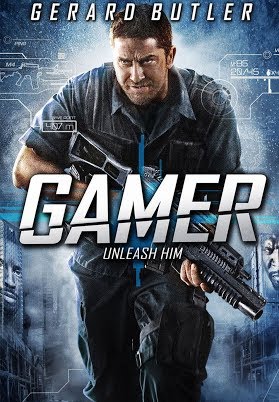
I know, as a man who knows how to make a film, that there is a better way to communicate to the audience what I am trying to say than just having more dialogue and more scenes.  It can be done by having a better camera angle, sounds, music and even the color of the film.  It is actually something that you see quite often but probably have never noticed.  One film I like to talk about from time to time is "Gamer".  No, not the film I made called "Gamer".  The film by Mark Neveldine and Brian Taylor that released in 2009.  It's color palette and sharpness of the film.  It has a very distinct look that brings out the hardness and the unique edge to the story line.  While this wasn't a box-office superstar, I found it to be a good movie.  It is gruesome and far fetched but that's my taste in movies.


Another movie that has a great color palette and a good sound choice is everyone'e favorite (but not mine) Avatar. The films score undertones the emotions that the director wanted you to feel and the coloring was always custom since it is just a really fancy cartoon with live action stuff thrown in.  (Have you ever seen Pocahontas?) These guys had the opportunity to change every aspect of the lighting and the surroundings.  The script wasn't a poor script and that definitively helped.

So, when we make a film we should worry about the script but even if that script is mediocre we can still make great cinema by utilizing the great tools we have in our film-makers quiver.  Lighting, sound, Actor choices and coloring after the fact.  No way is it all hinged upon the script.  There is so much more to it than that.

To Find More Stuff
or to Contact Me
Visit My Website

Tuesday, August 26, 2014

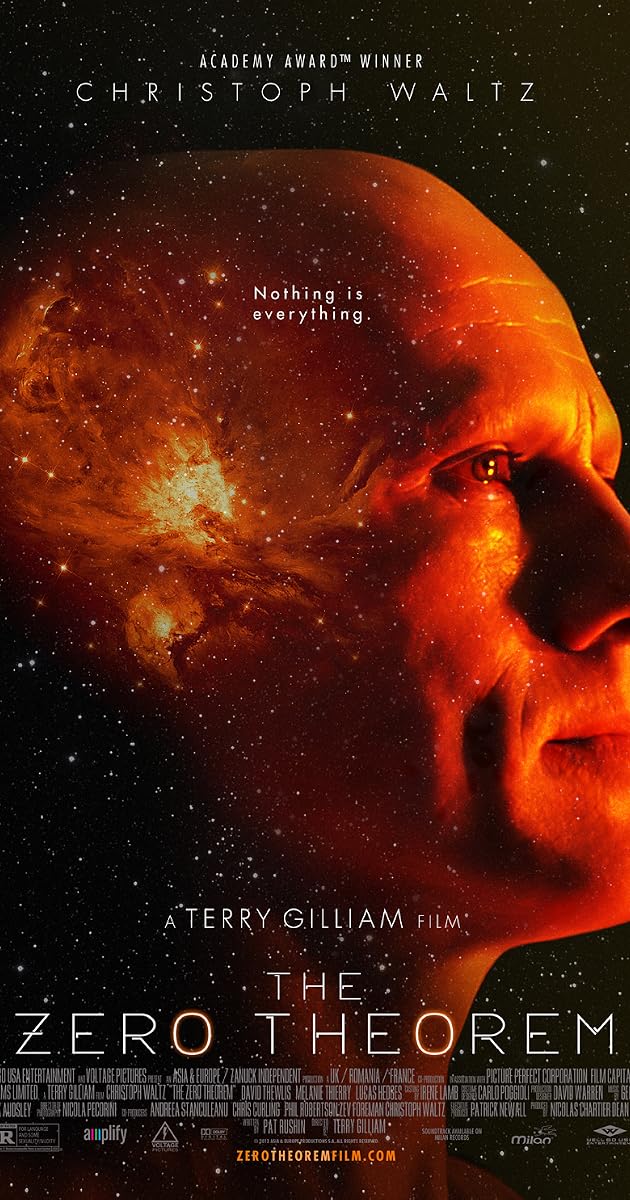
Great New Cinema: Zero Theorem

Tonight I was in a bad mood because of something that happened earlier in the day that was just just bad.  I won't go into details nor would you really want to hear about it since this is a blog about films and stuff.  When I got home, I decided to browse the Apple TV for anything to make my day better.  I went through everything on Netflix and just wasn't interested.  So I went to the pay movies where I found a piece of Cinematic Gold.  You see I am very interested in strange and wonderful movies.  I noticed that there was a Pre-Release download of the movie by director Terry Gilliam the maker of 12 Monkeys and the crazy movie Brazil.  Zero Theorem is a crazy film that makes me have faith in film again.  The synopsis on the about page for the movie does absolutely no justice to the actual story of the film.


Don't worry, No spoilers here.  The film is about a man who always refers to himself as "We" instead of I or me.  It is distracting for about a minute but it becomes endearing.  Making you want to feel for the man and his plight.  The character Quohen Leth (played by Austrian actor Christopher Waltz) is a simple and delicate man who is stuck in a job he likes but is always in a hurry to go home to catch a phone call from a mysterious being.  The cast of actors grows from there, David Thewlis (Prof, Lupin from Harry Potter fame), and Matt Damon to name a couple of better known folks.  The acting is very good with no flaws other than some minor characters who are there for their looks more than their acting abilities.  The characters are fleshed out with little hints of back-story here and there, just enough to make me feel like I understand them.
The filmmaking is absolutely great, as you would expect from Gilliam.  Crazy shots that span the close but expansive sets that litter the film.  In fact, most of the film takes place in the home of Quohen, which is a burnt out church he got at an insurance auction, but you never feel like you are constrained by the walls of the building, in fact, just the opposite.  And, of course, the dark comedy of Gilliam comes out through out the film.  Remember the church that he lives in?  It was inhabited by monks who took a vow of silence so meaningful to them that no one bothered to yell "fire".  Its not a direct quote, but it gets the point across about the morbidity and darkness of the subtle comedy that is very pervasive within the film itself.

One of the things that I really liked was the color scheme of the film.  All the tones match very nicely with Tacky notes of crazy costumes thrown in.  It hearkens back to his earlier works and holds true to the stylistic tones that are always very interesting.  The good news is that these aren't too overdone like the seventies counterparts to this film and it's genre making this a real pleasure to watch.  Every scene and shot was not only there to show the action but to tell its own story in conjunction with the narrative itself.  Something that modern cinema lacks, as I have stated before in my past blogs.

If you are looking for something different and true to the art of filmmaking, I recommend seeing this one.  Zero Theorem is most positively one of the films I recommend for any cine-file in 2014.  It turned my Very Bad Day into one that I am glad to have lived.


To Find More Stuff
or to Contact Me
Visit My Website

Monday, August 25, 2014

How Much Movies Have Changed: Review "The Long Goodbye"

As a filmmaker I am tasked with watching older works from the long ago past to keep a measure of style.  Sometimes I have a hard time finding that odd old film or two that is worthy of my attention.  I scour Netflix and Amazon Prime into their deep dark recesses and look for interesting blog, like this one, to help point me along the way.  Today I found that Netflix recently added "The Long Goodbye"

by Director Robert Altman (screenplay by Leigh Brackett).  The tale is of a Private Detective Philip Marlowe (Elliot Gould) and his accidental trouble brought on by his friend.  The movie has its expected 1970's nakedness from the hippie chicks next door and lots of Smoking.  The obligatory wife beating and mobster fiends who want blood, also a 1970's must have.  

One of the things that I found very interesting is the chasm that separates that film and many others from that era, from the films we make today.  For one, this film seemed to drag on and on.  I was interested for the most part but found that I was slightly bored with the cinematography and the slow story.  At first I was very interested in the strange tale of a man feeding his cat and the long takes of the camera lens, but they wore thin by about thirty minutes in.  In comparison to films of today the way it was shot is not to dissimilar in framing yet very dissimilar when it comes to duration and angle.  They had steady cams (hand held camera rigs) back then, of some sort, but it was all steady pedestal or dolly shots.  I guess you cannot fault them too much for that since the cameras weighed much more than they do now.  But the color of the film was very interesting.  We live in an age that is 80% digital in theaters and even more than that on TV.  That is no excuse, however, for the way our entertainment looks these days.  You see the color palette of the film is very different from today.  I thought about it a minute and although I couldn't find a similar movie, in my mind, that has came out in the past few years that is the same as "The Long Goodbye" I did find a period piece that may just foot the bill.You know is, "American Hustle".  It tries hard to get the period right but as far as the look of the film, it doesn't do it.  Here are two stills, back to back.
I think you can tell the difference.  One is fluid and the colors are intentionally captured in camera with an eye to the artistic side of things.  The other, well, it looks digital, even if it isn't, I mean, "American Hustle was shot on a Fuji Stock but it sure doesn't look like it.  Ok, maybe it does a little.  Regardless, the two film stills are worlds apart from each other.  I much like the look of "The Long Goodbye" much more than the slightly sanitary look of "American Hustle".  

The interesting thing about all of this is the standing fact that these movie makers CAN make their films look any way they want them to look.  Just look at some of the latest action flicks.  Many have that green tinge to them that we all know and love.  It is very easy to change the look of a film these days without worry of destroying it.  In fact, many films of the past had a reel or two destroyed by trying to change the way it printed out.  That is the price you pay with film stock sometimes.  Just to prove a point, here is a nothing film I shot so that I could play around with film emulation styles.  


Not only is the look of films different for today's audience, the way the story is told is much different.   It is said that modern audiences insist on having a fast paced and quick feeling movie.  If it doesn't move along, no one will watch it.  This may be true but I fear it is the film making community that caused it.  The long story line is often covered up by small quick actions that make the audience wake up.  Sometimes that long play is lost in the quick running waters of trying to stay relevant.  Now the audiences have gotten used to it, myself included, and if it takes too long, we walk.  But should we be like this?  Well, no... we shouldn't.  It will take a story that is worth its weight in gold and some better actors to get something like this to play out.  

I'm not saying that we should make every film like "The Long Goodbye".  It was, after all, really long and slightly boring with the story being replaced for just a moment with pretty pictures that meant nothing to the over all tale.   What I would like to see is a little more patience when making the films and a lot more attention being paid to the art behind the film itself.  For that is what I believe we have begun to loose, the heart and soul of our films.  The over all tonality needs to reflect more than a producers need to make money and more about what the film itself is adding to the story.  

To Find More Stuff
or to Contact Me
Visit My Site


Saturday, August 23, 2014

Can You make a movie with little to no Money?

As you may have suspected I am a Film Maker.  I make very short films that I like to call "Micro Budget" films.  These small movies consist of less than 15 pages of script and last, on average, three to five minutes.  I make these films so small because I have no money to pay anyone and the only way I can guarantee that it will get done and on time is to finish it in one day.  Yes, I know, those are historically called shorts but even a short film usually lasts 30 minutes or so, but when you are working with about $35 bucks for a production budget that can be a tall task.  More over, my actors are usually interested in only working a few hours and want immediate results.  I might be inclined to call myself a short order cook filmmaker, that sounds about right.  You see, I do not live in LA, Denver or even a smaller big city like Little Rock.  My acting pool comes from a very limited pool of actors and crew out of a little North West Arkansas town called Fayetteville.  Fayetteville has a population of roughly 75-80,000 people.  While the art scene here is quite plentiful it is not accustomed to making film, or even shorts.  Now, I am not saying that it is devoid of talent.  There are many here that make great films and more.  What I am trying to point out is the little problem of not having the funds to pay people to work.  Because the area is unaccustomed to the idea of making films, local investors tend to loose interest after saying hello.


Recently, in the past few years we have had some folks who were able to pay for the actors and crew to film in NWA (Fayetteville) and it spoiled the acting pool a little bit.  Films like "Greater, the Brandon Burlsworth Story" and "Valley Inn" as well as a few others paid a lot of people to work on their films.  This was great!  However, some of the films (of which I am not going to name names) had some missteps when it came to paying extras and eventually soured the taste for such things around the community.  Maybe it is starting to fade a little, this pain of working for nothing at all (in one case the extras weren't allowed to even have a bowl of pea nuts from the craft table), but shouldn't a film pay for the services of the people?  Yeah, they should.  I have tried numerous fundraising outlets to get a film going where everyone gets paid and paid fairly.  Those attempts have fallen flat, but at least I have tried, I really have.  So I stick with micro shorts and keep plugging.  Trying to make them as interesting as possible in a small amount of time.  So, it seems that you may need to have lots of money to make a film.  Ok, that makes sense.

Now, lets look at the flip-side of the coin.  Large movie companies are making bigger and bigger budgeted films in the past couple of years, and while they actually get the film to market and advertise incessantly, a lot of them have failed.  In 2014 there have been at least three big budget films that have fallen flat on their face. 
"Transcendence"  the movie with Johnny Depp uploading his consciousness to a computer cost 100 Million to make and only made 43% of it's money back.  Ouch!  That film even had high end great actors in it!  Another was the film Pompeii with Kit Harrington and Carrie-Anne Moss had an estimated budget of 100 Million as well and has of today made $108 million total.  That sounds like it has made money but don't forget that this includes the theater and distribution monies in it, TriStar/Sony/Columbia (all are virtually the same company) didn't get to take all that money home and spend it on Lambo's and pool parties.  All the while little films like "The Conjuring" with its budget of 20 million and "Paranormal Activity" with an astoundingly minuscule budget of 15 Thousand dollars brought in big money.  Makes these mistakes with big budgets look like the end of the world.  

To make a small film of about an hour to an hour and a half takes a little investment.  My friend Todd, who is the creator of the film "Neapolitan" (I am one of the "Stars") is to be released sometime, eventually... maybe.  Todd bankrolled the entire film and thought it would only cost a few thousand dollars, but that quickly ballooned into a figure that I am not privy to but I know it was a lot more than he bargained for.  He paid everyone of us a good wage and then paid some people who shouldn't have gotten as much as they did.  I am not bashing Todd, he did the right thing and no one is mad or upset about money.  The question I have is, could he have done it for less?  Probably.  Would it have hurt production? Maybe.  

I do know that you Can make a movie without spending money on more than pizza, gasoline and a hotel room or two.  The quality will not be world class but that may not matter much.  What does matter is the story.  A great story can outshine even the most mediocre of an actor, director, cinematographer and editor.  The sound could be "just ok" and not even matter.  Finding a story that will make people pay attention and draw them back in for another go is always priceless.  If you don't have that great story, it can be hard, but we can still make a film.  It is all about perseverance, and dedication.  

To make a no budget film that is watchable you will need to pay attention to every detail and you will need to be surrounded by dedicated and deliberate individuals.  Finding the people who actually care about the craft of filmmaking and will stick through the project no matter what, will allow you to make a movie without a mention-able budget.  It can be done.  Unfortunately for me, I haven't quite found the right folks, YET.  So, if you want to be in a film and can spare every free moment of every day making it happen, you and I need to talk.  I have great gear and the skills to make it work without having to break the bank.  If you wanna make a "Micro-Short", well, I am free on Monday.  How about a sequel to this one?


To Find More Stuff
or to Contact Me
Visit My Site