Showing posts with label Movie review. Show all posts

Saturday, August 30, 2014

What makes a good film?

Ah yes, what makes a film good.  That is a question which is sometimes very difficult to answer.  We all know why some films are good but not everyone can pinpoint the exact reason why.  Many of my fellow Filmmakers always believe that it is starting with a good script.  I suppose that's true but that is like saying how to make a good hamburger is to start with good meat.  DUH!  For real, is that the best you got?  You can have the greatest script known to man and a film still can be crap.  More often it's the other way around.  A Script can be mediocre or have been disemboweled by producers and execs to make it more marketable to a "larger" audience and still perform well at the box-office.

While this is a phenomena that you really cannot Google, they do exist.  Once a film starts to make money or gets an audience behind it the script is assumed to be a good script.  I mean, how else could it have been a great movie, right?  Lets take a movie like "Armageddon".  The film itself has everything you want and need to make a great movie; Cast, Music, Love, Peril, Strife, Comedy, Tragedy and more!  But if you just listen to some of the dialogue it isn't that great.  The actors did a great job of pulling it together as a great movie.  This is probably why the critics weren't too impressed by it.  The script just wasn't that good.  It made up for all its misgivings by overpowering those things with Great everything else.  Yes, having a great script can help overcome more than having great actors or special effects, but a great script doesn't come along every day.  In fact, it is quite a rarity.

Most scripts are derivatives of larger literary works.  Most of the time the original narrative is 200 to 400 pages long.  For some reason writers cannot seem to make something short.  They go on and on about the color of someones hair and how that makes the main character think about days gone by to set an emotion or the tone of the scene.  Unfortunately, it is next to impossible to do that in a film.  Do you really want me to stop the movie and take you to another place in time that has nothing really valuable to set the tone of the scene in the movie.  Ok, some of you do but most of us do not.  It causes confusion and adds unnecessary length to the narrative.  As a filmmaker I can set the tone with music, color, lighting or an addition of a small line or two that takes moments instead of minutes.  As a side note, this is one reason why books are mostly never like the movie, there just isn't enough time.
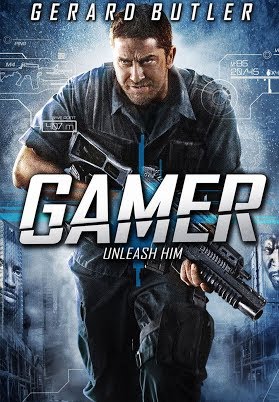
I know, as a man who knows how to make a film, that there is a better way to communicate to the audience what I am trying to say than just having more dialogue and more scenes.  It can be done by having a better camera angle, sounds, music and even the color of the film.  It is actually something that you see quite often but probably have never noticed.  One film I like to talk about from time to time is "Gamer".  No, not the film I made called "Gamer".  The film by Mark Neveldine and Brian Taylor that released in 2009.  It's color palette and sharpness of the film.  It has a very distinct look that brings out the hardness and the unique edge to the story line.  While this wasn't a box-office superstar, I found it to be a good movie.  It is gruesome and far fetched but that's my taste in movies.


Another movie that has a great color palette and a good sound choice is everyone'e favorite (but not mine) Avatar. The films score undertones the emotions that the director wanted you to feel and the coloring was always custom since it is just a really fancy cartoon with live action stuff thrown in.  (Have you ever seen Pocahontas?) These guys had the opportunity to change every aspect of the lighting and the surroundings.  The script wasn't a poor script and that definitively helped.

So, when we make a film we should worry about the script but even if that script is mediocre we can still make great cinema by utilizing the great tools we have in our film-makers quiver.  Lighting, sound, Actor choices and coloring after the fact.  No way is it all hinged upon the script.  There is so much more to it than that.

To Find More Stuff
or to Contact Me
Visit My Website

Monday, August 25, 2014

How Much Movies Have Changed: Review "The Long Goodbye"

As a filmmaker I am tasked with watching older works from the long ago past to keep a measure of style.  Sometimes I have a hard time finding that odd old film or two that is worthy of my attention.  I scour Netflix and Amazon Prime into their deep dark recesses and look for interesting blog, like this one, to help point me along the way.  Today I found that Netflix recently added "The Long Goodbye"

by Director Robert Altman (screenplay by Leigh Brackett).  The tale is of a Private Detective Philip Marlowe (Elliot Gould) and his accidental trouble brought on by his friend.  The movie has its expected 1970's nakedness from the hippie chicks next door and lots of Smoking.  The obligatory wife beating and mobster fiends who want blood, also a 1970's must have.  

One of the things that I found very interesting is the chasm that separates that film and many others from that era, from the films we make today.  For one, this film seemed to drag on and on.  I was interested for the most part but found that I was slightly bored with the cinematography and the slow story.  At first I was very interested in the strange tale of a man feeding his cat and the long takes of the camera lens, but they wore thin by about thirty minutes in.  In comparison to films of today the way it was shot is not to dissimilar in framing yet very dissimilar when it comes to duration and angle.  They had steady cams (hand held camera rigs) back then, of some sort, but it was all steady pedestal or dolly shots.  I guess you cannot fault them too much for that since the cameras weighed much more than they do now.  But the color of the film was very interesting.  We live in an age that is 80% digital in theaters and even more than that on TV.  That is no excuse, however, for the way our entertainment looks these days.  You see the color palette of the film is very different from today.  I thought about it a minute and although I couldn't find a similar movie, in my mind, that has came out in the past few years that is the same as "The Long Goodbye" I did find a period piece that may just foot the bill.You know is, "American Hustle".  It tries hard to get the period right but as far as the look of the film, it doesn't do it.  Here are two stills, back to back.
I think you can tell the difference.  One is fluid and the colors are intentionally captured in camera with an eye to the artistic side of things.  The other, well, it looks digital, even if it isn't, I mean, "American Hustle was shot on a Fuji Stock but it sure doesn't look like it.  Ok, maybe it does a little.  Regardless, the two film stills are worlds apart from each other.  I much like the look of "The Long Goodbye" much more than the slightly sanitary look of "American Hustle".  

The interesting thing about all of this is the standing fact that these movie makers CAN make their films look any way they want them to look.  Just look at some of the latest action flicks.  Many have that green tinge to them that we all know and love.  It is very easy to change the look of a film these days without worry of destroying it.  In fact, many films of the past had a reel or two destroyed by trying to change the way it printed out.  That is the price you pay with film stock sometimes.  Just to prove a point, here is a nothing film I shot so that I could play around with film emulation styles.  


Not only is the look of films different for today's audience, the way the story is told is much different.   It is said that modern audiences insist on having a fast paced and quick feeling movie.  If it doesn't move along, no one will watch it.  This may be true but I fear it is the film making community that caused it.  The long story line is often covered up by small quick actions that make the audience wake up.  Sometimes that long play is lost in the quick running waters of trying to stay relevant.  Now the audiences have gotten used to it, myself included, and if it takes too long, we walk.  But should we be like this?  Well, no... we shouldn't.  It will take a story that is worth its weight in gold and some better actors to get something like this to play out.  

I'm not saying that we should make every film like "The Long Goodbye".  It was, after all, really long and slightly boring with the story being replaced for just a moment with pretty pictures that meant nothing to the over all tale.   What I would like to see is a little more patience when making the films and a lot more attention being paid to the art behind the film itself.  For that is what I believe we have begun to loose, the heart and soul of our films.  The over all tonality needs to reflect more than a producers need to make money and more about what the film itself is adding to the story.  

To Find More Stuff
or to Contact Me
Visit My Site