We all have it in us, a story that needs to be told. Some act upon it, some aren't aware of it and some, well... some are like me and consumed by it. I have always been able to come up with a story just by looking at an object, observing people or just sitting on my couch doing nothing. These stories have consumed me and have bored me. Some have made me pace around the house looking for the right words to transpose upon paper or type into a document. It is these stories that have driven me to make films. I admit, I tried writing a book or two in my life, but the training that I needed to make them coherent I just didn't have. On the other hand, making them into a visual story has always been something I inherently have a talent for.
I began making films a very long time ago. Ok, not that long ago, but far enough in the past that I did not have access to the tools to even attempt to do it right. Even 10 years ago the cost of making a film was too high for a first timer. Now the time is right. Filming has become accessible to the lowest on the totem pole for a small amount of money.
In 1991 Richard Linklater made a movie called "Slacker". It was arguably a film that made history. The film was done for around twenty five thousand dollars and was shot with actors that were less than trained, with a few that were. It was mostly incoherent prose and conspiracy theory mixed with nonsensical dialogue. With all of that, it still won film festivals and even played at Sundance, ushering an "independent film" sub genre.
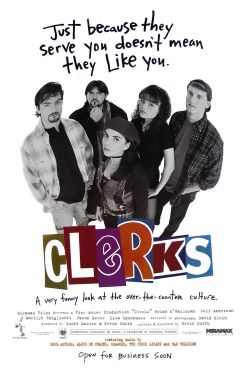
After "Slacker" we saw another indie film that rose to stardom and launched many careers of Pop Culture Icons. Kevin Smith's cult classic "Clerks" makes many of the same arguments and has conspiracy theory throughout but in the form of Comic Book references and crassness (of which I love tremendously). It's success spun off many movies, TV show pilots and even a Saturday morning cartoon. This film is as eerily the same as slacker as it is different.
A phenomenal success and a very cheap film to make, "Clerks" was shot in black and white in a world of color only because they didn't have enough cash on hand to buy the color film stock.
Even though these films were made for "nothing" in comparison to even the cheapest of the movies in the 1990's, they still cost the equivalent of Fifty and Thirty thousand dollars in today's money, respectively. For the average man or woman in even the middle class of American society, these amounts are pipe dreams. Who in their right mind would spend an entire years salary or max out a bunch of credit cards to make a movie that might possibly never be seen by anyone? I would, if I had it to spend, but that's just me and I don't.
Since it has been deemed financially unattainable to pay for a film out of my own pocket I work very hard at making them for FREE. Yes, I said FREE. Well, they aren't technically free, I suppose. I did buy the camera and the lenses as well as the computer and other nefarious items that I probably don't need to tell an effective story. But lets not ponder on that too long, right now.
Everyone with a modern smart phone can make a film for free. All you need is dedicated people to surround you. If you want to make a movie that doesn't look too bad and it sounds good you can definitely do it for a few thousand dollars in equipment and about a hundred hours of you tube learning about lighting and camera composition. Get a boom mic, a pole to put it on a DSLR and about three lights. You probably wont make the next Hollywood Blockbuster but you WILL make something special to you and the people that helped create it.
So now, It's up to you... and me, I guess.
I am a filmmaker, Photographer, Graphic and VFX artist. My biggest passion is learning new stuff and making the best film and art that I can.
Showing posts with label indie film. Show all posts
Monday, June 26, 2017
Saturday, August 30, 2014
What makes a good film?
Ah yes, what makes a film good. That is a question which is sometimes very difficult to answer. We all know why some films are good but not everyone can pinpoint the exact reason why. Many of my fellow Filmmakers always believe that it is starting with a good script. I suppose that's true but that is like saying how to make a good hamburger is to start with good meat. DUH! For real, is that the best you got? You can have the greatest script known to man and a film still can be crap. More often it's the other way around. A Script can be mediocre or have been disemboweled by producers and execs to make it more marketable to a "larger" audience and still perform well at the box-office.
While this is a phenomena that you really cannot Google, they do exist. Once a film starts to make money or gets an audience behind it the script is assumed to be a good script. I mean, how else could it have been a great movie, right? Lets take a movie like "Armageddon". The film itself has everything you want and need to make a great movie; Cast, Music, Love, Peril, Strife, Comedy, Tragedy and more! But if you just listen to some of the dialogue it isn't that great. The actors did a great job of pulling it together as a great movie. This is probably why the critics weren't too impressed by it. The script just wasn't that good. It made up for all its misgivings by overpowering those things with Great everything else. Yes, having a great script can help overcome more than having great actors or special effects, but a great script doesn't come along every day. In fact, it is quite a rarity.
Most scripts are derivatives of larger literary works. Most of the time the original narrative is 200 to 400 pages long. For some reason writers cannot seem to make something short. They go on and on about the color of someones hair and how that makes the main character think about days gone by to set an emotion or the tone of the scene. Unfortunately, it is next to impossible to do that in a film. Do you really want me to stop the movie and take you to another place in time that has nothing really valuable to set the tone of the scene in the movie. Ok, some of you do but most of us do not. It causes confusion and adds unnecessary length to the narrative. As a filmmaker I can set the tone with music, color, lighting or an addition of a small line or two that takes moments instead of minutes. As a side note, this is one reason why books are mostly never like the movie, there just isn't enough time.
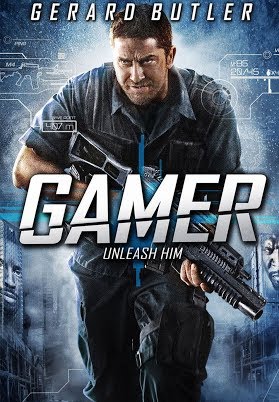
I know, as a man who knows how to make a film, that there is a better way to communicate to the audience what I am trying to say than just having more dialogue and more scenes. It can be done by having a better camera angle, sounds, music and even the color of the film. It is actually something that you see quite often but probably have never noticed. One film I like to talk about from time to time is "Gamer". No, not the film I made called "Gamer". The film by Mark Neveldine and Brian Taylor that released in 2009. It's color palette and sharpness of the film. It has a very distinct look that brings out the hardness and the unique edge to the story line. While this wasn't a box-office superstar, I found it to be a good movie. It is gruesome and far fetched but that's my taste in movies.
Another movie that has a great color palette and a good sound choice is everyone'e favorite (but not mine) Avatar. The films score undertones the emotions that the director wanted you to feel and the coloring was always custom since it is just a really fancy cartoon with live action stuff thrown in. (Have you ever seen Pocahontas?) These guys had the opportunity to change every aspect of the lighting and the surroundings. The script wasn't a poor script and that definitively helped.
So, when we make a film we should worry about the script but even if that script is mediocre we can still make great cinema by utilizing the great tools we have in our film-makers quiver. Lighting, sound, Actor choices and coloring after the fact. No way is it all hinged upon the script. There is so much more to it than that.
While this is a phenomena that you really cannot Google, they do exist. Once a film starts to make money or gets an audience behind it the script is assumed to be a good script. I mean, how else could it have been a great movie, right? Lets take a movie like "Armageddon". The film itself has everything you want and need to make a great movie; Cast, Music, Love, Peril, Strife, Comedy, Tragedy and more! But if you just listen to some of the dialogue it isn't that great. The actors did a great job of pulling it together as a great movie. This is probably why the critics weren't too impressed by it. The script just wasn't that good. It made up for all its misgivings by overpowering those things with Great everything else. Yes, having a great script can help overcome more than having great actors or special effects, but a great script doesn't come along every day. In fact, it is quite a rarity.
Most scripts are derivatives of larger literary works. Most of the time the original narrative is 200 to 400 pages long. For some reason writers cannot seem to make something short. They go on and on about the color of someones hair and how that makes the main character think about days gone by to set an emotion or the tone of the scene. Unfortunately, it is next to impossible to do that in a film. Do you really want me to stop the movie and take you to another place in time that has nothing really valuable to set the tone of the scene in the movie. Ok, some of you do but most of us do not. It causes confusion and adds unnecessary length to the narrative. As a filmmaker I can set the tone with music, color, lighting or an addition of a small line or two that takes moments instead of minutes. As a side note, this is one reason why books are mostly never like the movie, there just isn't enough time.
I know, as a man who knows how to make a film, that there is a better way to communicate to the audience what I am trying to say than just having more dialogue and more scenes. It can be done by having a better camera angle, sounds, music and even the color of the film. It is actually something that you see quite often but probably have never noticed. One film I like to talk about from time to time is "Gamer". No, not the film I made called "Gamer". The film by Mark Neveldine and Brian Taylor that released in 2009. It's color palette and sharpness of the film. It has a very distinct look that brings out the hardness and the unique edge to the story line. While this wasn't a box-office superstar, I found it to be a good movie. It is gruesome and far fetched but that's my taste in movies.
Another movie that has a great color palette and a good sound choice is everyone'e favorite (but not mine) Avatar. The films score undertones the emotions that the director wanted you to feel and the coloring was always custom since it is just a really fancy cartoon with live action stuff thrown in. (Have you ever seen Pocahontas?) These guys had the opportunity to change every aspect of the lighting and the surroundings. The script wasn't a poor script and that definitively helped.
So, when we make a film we should worry about the script but even if that script is mediocre we can still make great cinema by utilizing the great tools we have in our film-makers quiver. Lighting, sound, Actor choices and coloring after the fact. No way is it all hinged upon the script. There is so much more to it than that.
To Find More Stuff
or to Contact Me
Visit My Website
Subscribe to:
Posts (Atom)